Rugby Ruck Choices That Shape the Next Phase
Follow rugby ruck choices from tackle to next phase: see when the contest forms, what the ball allows, and why an attack passes, carries or kicks.
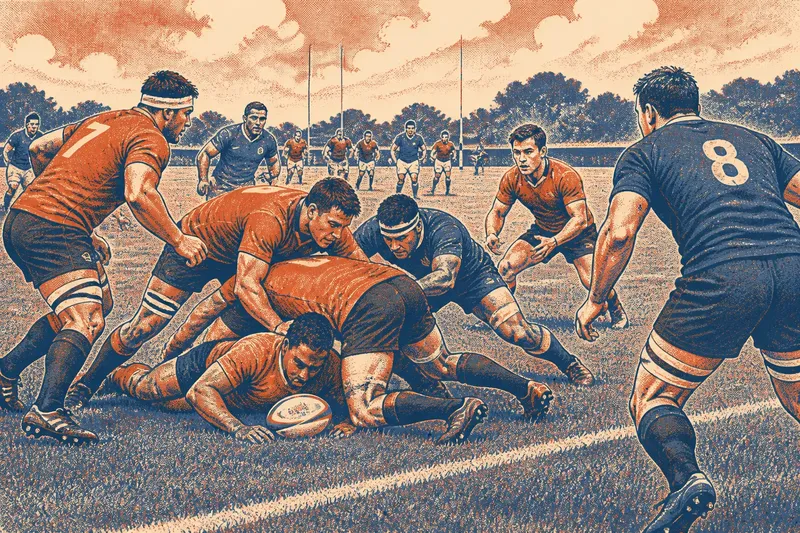
The ball-carrier lands just short of the defensive line. One teammate arrives, a defender closes in, and the scrum-half waits behind them. Rugby ruck choices begin with the ball on the ground: who may play it, whether a ruck has formed, and what the attack can do next.
Rather than count bodies in a pile, follow the ball and the players’ feet. That shows whether possession is available, whether either team can still contest it, and why the next phase takes a particular route.
What changes when a ruck forms?
A ruck forms when at least one player from each team is in physical contact, on their feet, over the ball on the ground. Players can bind to one another or to an opponent, but the defining point is contact between opponents in that contest. A loose ball after a tackle is not automatically a ruck.
Before a ruck forms, an onside player who arrives legally and stays on their feet may be able to pick up the ball. Once the ruck exists, players generally cannot use their hands to pick the ball up from within it. The ball must be played out of the ruck or become available at its rear for the next action.
Imagine a tackled player places the ball back, and an onside teammate reaches it before any opponent makes contact with an attacker over the ball. The teammate can gather it while it remains a loose ball. If an opponent then engages that teammate over the ball while both are on their feet, a ruck forms; the contest has changed, and reaching in with hands is no longer the ordinary way to win it.
How does the tackle set up the contest?
After a tackle, the ball-carrier must release the ball promptly and not get up to continue playing. The tackler must release the tackled player and move away or get back to their feet before playing the ball. Players who want to contest possession must approach from their own side and remain on their feet.
Watch where the ball ends up. A clear placement back toward teammates gives them a more direct route to secure or play it. If bodies trap the ball, support may have to clear space before the attack can move it. That can give defenders time to organize, even if the attacking team retains possession.
How much support should the attack commit?
Attackers can bind over the ball to protect it and prevent defenders from disrupting possession. Their arrival may make the ball safer, but those players are no longer available as immediate receivers farther out.
If support is late or the carrier is isolated, the ball may be exposed. If several attackers commit, possession may be more secure, but the scrum-half may have fewer options across the field. There is no fixed number that makes every ruck safe; the useful clue is whether the ball is protected and playable.
What can defenders legally contest?
Defenders must enter from their own side, through the area behind the last player in the ruck, and stay on their feet. They can bind and drive opponents back. They cannot take a side route, reach in with a hand once the ruck has formed, or play the ball while grounded.
For viewers, separate the attempt from the outcome. A defender may appear to reach the ball but still be penalized for entering from the side or failing to support their own weight. Check the route into the contest and whether the player stayed on their feet; the final tangle does not always reveal the original infringement.
Should the ball move quickly or wait?
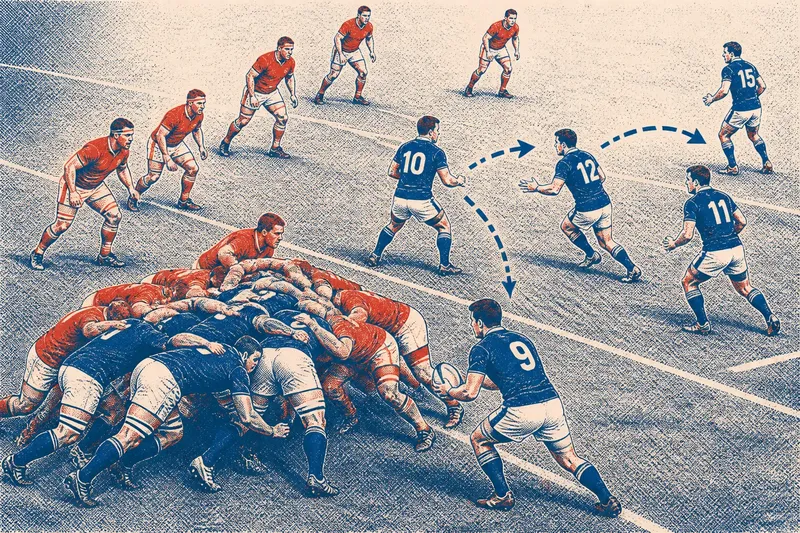
When the ball is available at the back of the ruck, the scrum-half can pass, carry or kick. A quick pass may reach defenders before they reset their spacing. But speed has little value if the next receiver is standing still and already marked.
A short pause can let teammates reposition and give the scrum-half a clearer view. It also gives defenders time to drift across or close the gap. Look at the players beyond the ruck: are they moving forward, spreading wide or waiting flat? Their shape helps explain whether an immediate pass is useful.
Which attacking route makes sense?
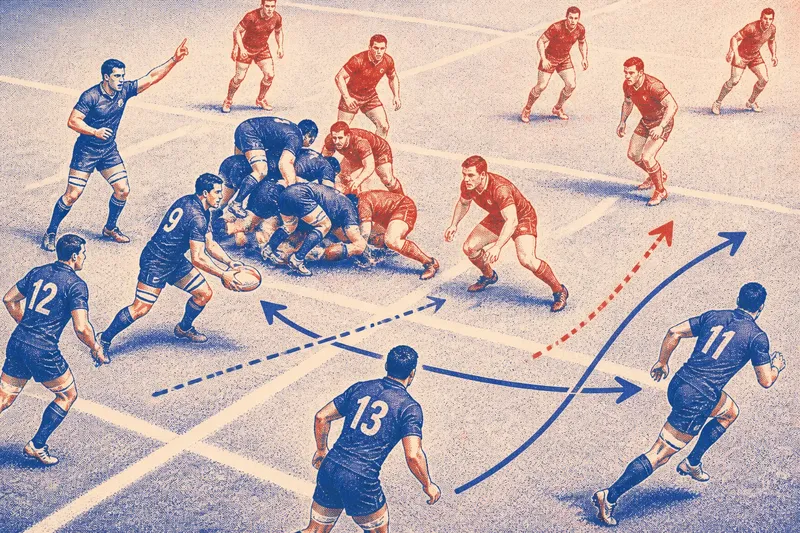
A pass across the field can test a defense that has crowded the ruck. A close carry can challenge a narrow gap or make defenders tackle and regroup. A kick can put pressure behind a line that is advancing, but it may also return possession to the opposition.
Say an attack has carried twice in a narrow channel, drawing several defenders toward the ruck. The scrum-half sees teammates waiting farther out and passes wide instead of sending another close runner. The expected result is that defenders have to cover more ground across the field, giving the outside attackers a chance to find space. It is an opportunity, not a promise; the defense can still move across in time.
What if the ball cannot be played?
A ball trapped in an unplayable ruck may lead the referee to award a scrum, depending on the circumstances and the applicable law. A deliberate collapse or another infringement can instead result in a penalty. The outcome is not simply decided by which team has more bodies in the contest.
Notice whether the ball is visible and whether the players are still making progress. A ball available at the back is different from one buried under players. If it is playable, the attack can move it; if it is trapped, the referee must decide whether play can continue and how it should restart.
What do viewers ask about rugby ruck choices?
Can a player pick up the ball before a ruck forms?
An onside player may pick up a loose ball if they arrive legally and are on their feet, provided a ruck has not formed. Once opponents engage over the ball on the ground, the rules governing the ruck apply.
Why might a defender be penalized at a ruck?
Common reasons include entering from the side, playing the ball with hands after the ruck forms, or failing to stay on the feet. Watch the player’s approach as well as the contact.
When can the scrum-half play the ball?
The scrum-half can play it once it is available at the back of the ruck, subject to the laws and the players’ positions. A ball still trapped within the contest is not the same as one that has emerged.
Why might a team pass immediately after a tackle?
If the ball is available and support has secured it, a quick pass may reach defenders before they reset. The attack may instead carry, wait or kick if the defensive shape makes another option more useful.
What should you check before judging the next phase?
- Check whether the tackled player releases the ball. If the ball is placed back, expect support to secure or play it; if it remains trapped, expect a delay while players clear space.
- Check whether players from both teams are in contact over the ball on the ground and on their feet. If they are, treat the contest as a ruck; if not, look for a legal pickup of a loose ball.
- Check whether arriving players come from their own side. If they enter through the rear of the contest, they may join legally; if they arrive from the side, watch for a penalty.
- Check whether a defender stays on their feet and avoids using hands after the ruck forms. If so, they may drive or contest within the laws; if not, the referee may penalize the infringement.
- Check whether attackers protect the ball or leave it exposed. If it is protected and available, expect the scrum-half to choose an option; if support is late, expect the attack to spend time securing possession.
- Check the defensive line beyond the ruck. If it is crowded near the ball, a pass wide may test the space; if it is spread or rushing forward, a direct carry or kick may be considered instead.
Read the contest from the ball outward: release, contact, support, and then the scrum-half’s choice. That order makes the next phase easier to follow without treating every pile of bodies as a mystery or every quick pass as a good one. Keep the ball in view as it leaves the ruck; its route often shows what the attack thought the defense was leaving open.